
The disadvantages:
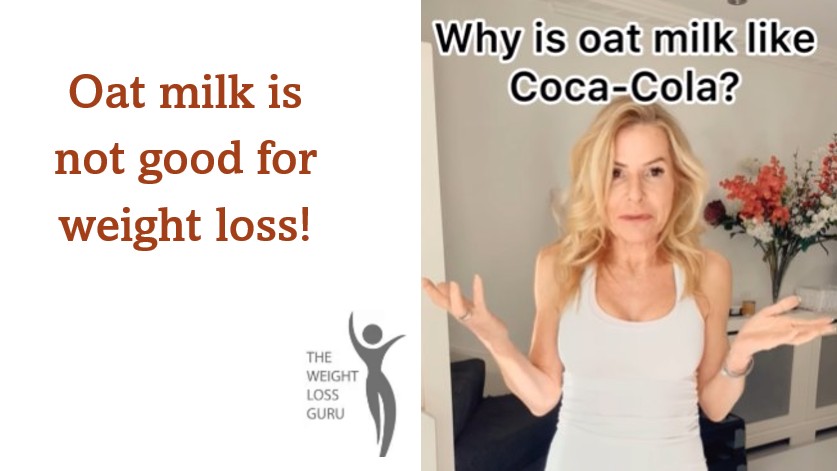
While the high carbohydrate content of oat milk can be an advantage for an athlete or a child – for many, if you have a history of diabetes or high blood sugar, it might be a downside. As mentioned in my video, the production process of oat milk strips some of the fibre from the oats. Fibre is important because it slows down the absorption of carbohydrates, which increases your blood sugar slowly. However, since oat milk has less fibre than actual oats, the carbs in oat milk will cause faster blood sugar spikes than whole oats. If you’re concerned about blood sugar spikes, oat milk may not be the best option.
Try lower-carbohydrate alternatives like almond or soya milk instead.
Better strategy:
Try lower-carbohydrate alternatives like almond or soya milk instead.
Further evidence:
A cup of original oat milk from Oatly contains 7 grams of sugar.
According to the USDA, a cup of Oatly Oat milk contains 120 calories, 3 grams of protein, 5 grams of fat, 16 grams of carbohydrate, 2 grams of fibre, and 7 grams of sugar.
Some brands add small amounts of additives, such as gums, oils, and stabilisers. To avoid additives and other synthetic ingredients, check the product labels and find brands with more straightforward ingredient lists.
So, in the weight loss stage, use alternative higher protein-based milk.
Are you confused by all those faux marketing claims out there? Do you find yourself bombarded by mixed messages? Do you want to learn the truth once and for all?
Book onto one of our 1-2-1 programs and get set sorted – for good this time.
By working together, we can craft a lifestyle that’s not only healthy and balanced but also brings joy and feels amazing.